
⚠️ Climbing the Heights of Christian Higher Education: Why True Discipleship Must Come Before Academic Excellence
Climbing the Heights of Christian Higher Education: Why True Discipleship Must Come Before Academic Excellence
Introduction — The Changing Landscape of Christian Academia
Across the globe, Christian higher education faces a sobering reality. Declining enrollment, cultural secularization, and an increasingly post-Christian society have placed many faith-based universities in a struggle for relevance and survival. Institutions once known for their strong biblical foundations now find themselves competing in a marketplace that values technology, innovation, and diversity—but often neglects the spiritual heart of learning.
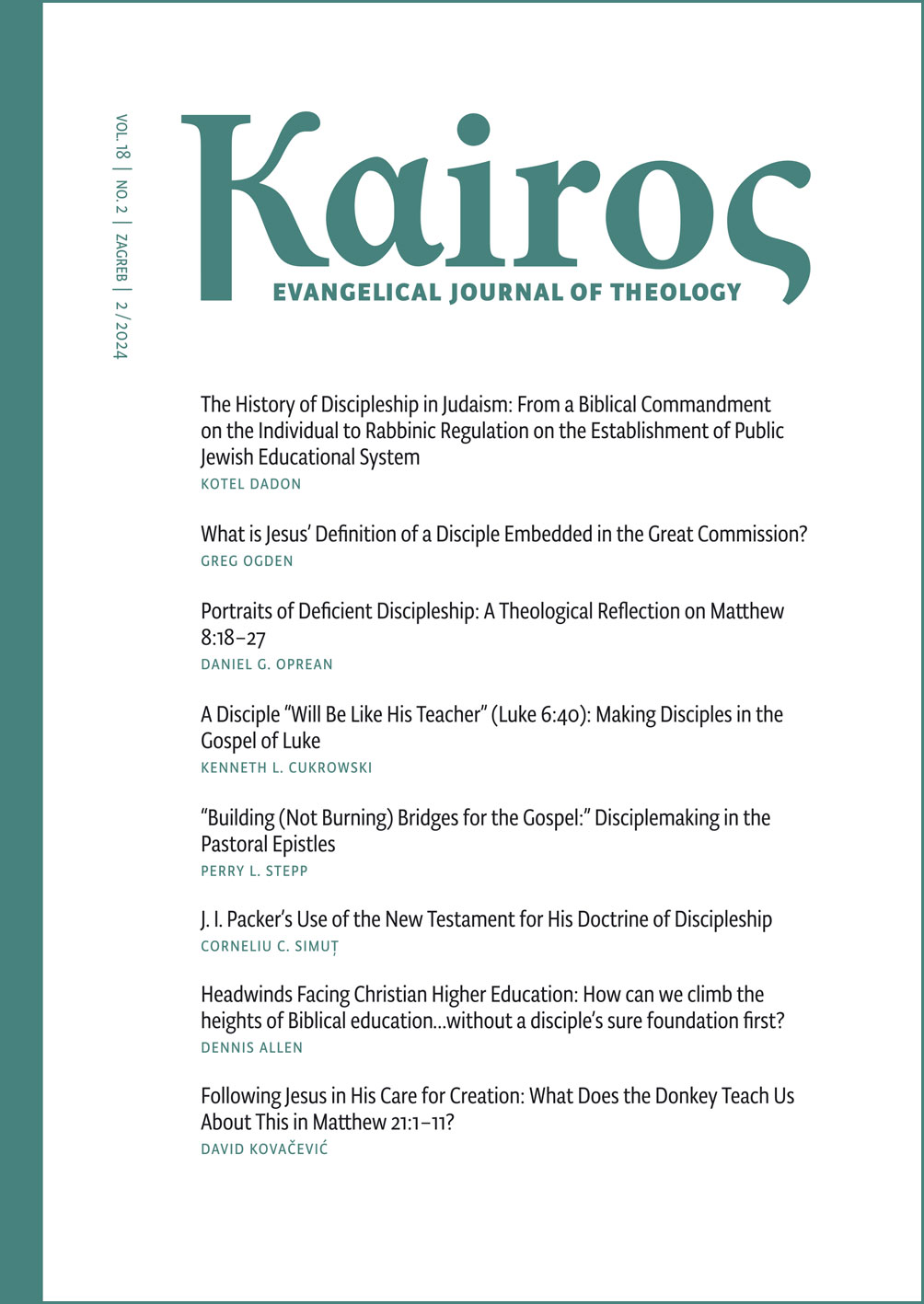
The recent rise of the “Nones” (those with no religious affiliation) and “Dones” (those who have left the church) underscores this crisis. Christian colleges and universities are losing not only students but also their spiritual distinctiveness. As Dennis Allen (2023) argues in his paper Headwinds Facing Christian Higher Education, the true challenge isn’t external competition—it’s internal drift. When discipleship weakens, mission fades.
The Core Crisis: Education Without Discipleship
For centuries, Christian education has been defined by its integration of faith and learning. However, many modern Christian institutions have become more “Christian-branded” than “Christ-centered.” The academic pursuit of excellence has sometimes replaced the spiritual pursuit of transformation.
Allen (2023) contends that most Christian institutions are now populated by under-discipled students, products of churches that emphasize membership over mentorship. As a result, these universities produce graduates who are academically informed but spiritually shallow—capable professionals but not necessarily disciples.
A growing number of Christian universities across the United States, the United Kingdom, and Africa reflect this pattern. For instance, several small Bible colleges have closed in recent years due to declining faith engagement, while others have pivoted toward purely professional degrees, leaving theology and discipleship as optional electives.
The Four Quadrants of Institutional Health
In his Wall Street–style risk assessment, Allen categorizes institutions into four quadrants—Thriving, Hoping, Inertia, and Struggling—based on student headcount and financial investment.
-
Thriving schools are those maintaining a strong discipleship culture alongside academic rigor.
-
Hoping schools still aspire to renewal but lack strategic focus.
-
Inertia schools remain operational but stagnant, surviving on tradition rather than transformation.
-
Struggling schools are in visible decline, often closing or merging with others.
A concerning majority of institutions fall into the “Hoping” or “Struggling” categories, suggesting that while the mission of Christian higher education remains noble, its execution has grown fragile.
A 2023 study by the Council for Christian Colleges and Universities (CCCU) confirms similar trends: enrollment among faith-based institutions has declined by roughly 9% over five years, with mission alignment cited as a key differentiator between growing and declining schools.
Reclaiming the Mission: Discipleship as Strategy
The path forward is not simply about modernizing programs or enhancing marketing. It requires rediscovering the why behind Christian education. True transformation in higher education begins not in the classroom but in discipleship.
Allen introduces the concept of Empyreal Discipleship—a call for faculty members to act not just as instructors but as visible disciple-makers. This model envisions professors who weave spiritual mentorship into academic teaching, embodying the same relational, life-on-life approach modeled by Christ Himself.
Real-World Example: Pacesetters Christian University (PCU)
Imagine a university where spiritual formation is not an extracurricular activity but a daily rhythm. At Pacesetters Christian University (Houston, Texas), for example, the integration of faith and learning could take the form of discipleship-focused seminars, where faculty and students engage in open dialogue on applying biblical values in science, business, and digital ethics. Such intentional mentorship bridges the gap between intellectual development and spiritual maturity.
Other institutions, such as Baylor University, have begun to reclaim this approach through their Faith and Learning Initiative, encouraging faculty to integrate Christian worldview frameworks across all disciplines. The result is not just smarter students—but stronger disciples.
Practical Pathways for Renewal
Rebuilding the spiritual core of Christian higher education requires concrete, intentional strategies. Here are five steps institutions can take to restore mission-centered learning:
-
Reform the Curriculum
Embed discipleship principles in every discipline—not just theology. Courses in leadership, engineering, or digital innovation should integrate ethical and biblical frameworks. -
Train Faculty as Disciple-Makers
Professors should be equipped to model spiritual growth alongside intellectual development, following the biblical principle of 2 Timothy 2:2: “And the things you have heard me say in the presence of many witnesses entrust to reliable people who will also be qualified to teach others.” -
Build Community-Based Mentorship
Partner students with faculty and local churches to create multi-generational mentorship networks, reinforcing both accountability and belonging. -
Foster Spiritual Habits in Campus Life
Daily prayer gatherings, service learning, and reflective journaling can help integrate faith into the academic rhythm. -
Leverage Technology for Discipleship
Online platforms should not just deliver lectures but also cultivate community—through virtual Bible studies, prayer rooms, and faith-based discussion boards.
When faith and scholarship walk hand in hand, Christian universities can once again become training grounds for transformation rather than mere credentialing institutions.
Building on the Rock, Not the Sand
Jesus’ parable in Matthew 7:24–27 reminds us that a house built on sand cannot withstand storms. In the same way, an educational institution built solely on prestige or productivity cannot endure the cultural headwinds of modernity. Christian higher education must return to its foundation—Christ Himself.
If faculty, administrators, and students recommit to authentic discipleship, Christian universities will not merely survive—they will thrive as beacons of light in a world desperately seeking truth.
The future of Christian higher education depends not on bigger endowments or newer facilities, but on whether it can rediscover the simple, radical call of Jesus: “Go and make disciples.”
References (APA 7th Edition)
Allen, D. (2023). Headwinds facing Christian higher education: How can we climb the heights of biblical education without a disciple’s sure foundation first? Kaleo Journal, 18(2), 77–90. https://doi.org/10.32862/k.18.2.7
Council for Christian Colleges and Universities. (2023). Faith and learning in a changing world: Annual report on Christian higher education. Washington, D.C.: CCCU Press.
Smith, J., & Emerson, M. (2022). Renewing faith in learning: Integrating discipleship and academia in the 21st century. Grand Rapids, MI: Baker Academic.
Pacesetters Christian University. (2024). Faith-integrated learning model and student mentorship framework. Houston, TX: PCU Publications.
Baylor University. (2022). Faith and Learning Initiative Report. Waco, TX: Office of Spiritual Life.